The Organic Traffic Bottleneck: How to Automate Pinterest for Consistent Buyer Traffic
Discover the proven system for transforming Pinterest into a self-sustaining traffic engine that delivers high-intent buyers to your website on autopilot — without ads, without constant manual work, and without relying on unpredictable social media algorithms.
Mada Authority Team
SEO & Traffic Automation Specialists

Key Takeaways
- Programmatic URL-to-pin automation transforms blogs and stores into a steady stream of optimized Pinterest content
- Keyword-driven SEO aligns pins with high-intent buyer searches, not just vanity impressions
- Three pin formats — standard, rich/product, and video — cover the entire buyer journey from awareness to purchase
- Brand kit governance ensures visual consistency at scale without manual design oversight
- Continuous analytics and A/B testing turn Pinterest into a measurable, improvable traffic channel
Introduction
Understanding the Organic Pinterest Landscape
Pinterest is not a social media platform. It is a visual search engine with over 619 million monthly active users who arrive with intent — they are planning, researching, and ready to buy. Unlike ephemeral social feeds where content disappears within hours, Pinterest pins remain discoverable for months, even years, creating a compounding effect that no other platform can match.
For affiliates, e-commerce brands, bloggers, and digital entrepreneurs, this means Pinterest offers something precious: sustainable visibility. When your content aligns with what people are actively searching for, you do not just get traffic — you get buyer traffic. People who are looking for solutions, comparing products, and ready to make decisions.
The challenge? Most businesses treat Pinterest like an afterthought. They post sporadically, use random images, and wonder why they are not seeing results. The real opportunity lies in treating Pinterest as a systematic traffic channel — one that can be automated, optimized, and scaled.
Why Automation Matters for Consistent Buyer Traffic
Manual Pinterest marketing creates a bottleneck. You pin when you remember. You design when you have time. The result is inconsistent visibility, unpredictable traffic, and burnout. Automation removes the human bottleneck and replaces it with a repeatable system.
The core benefit is transforming episodic effort into a perpetual motion machine. By integrating keyword data, templated designs, and scheduling logic, you maintain a constant presence in Pinterest search results — even while you sleep. A home decor seller can automate seasonal pins with validated terms like "mid-century lamp" or "coastal living room." A fitness coach can pin workout guides tied to trending search queries. The system runs itself.
Skip the Manual Grind
Want to turn your blog URLs into high-converting video and image pins completely on autopilot? TrafficWave Generator 3.0 handles the entire pipeline — from content ingestion to pin creation, SEO optimization, and scheduled publishing.
Try TrafficWave Generator Risk-Free1. Automated Pin Flow System: Programmatic URL-to-Pin Automation
Manual Pinterest marketing hits a ceiling fast. The more content you create, the more pins you need. The more pins you need, the more design time you burn. At some point, the effort outweighs the return. That is where programmatic URL-to-pin automation changes everything.
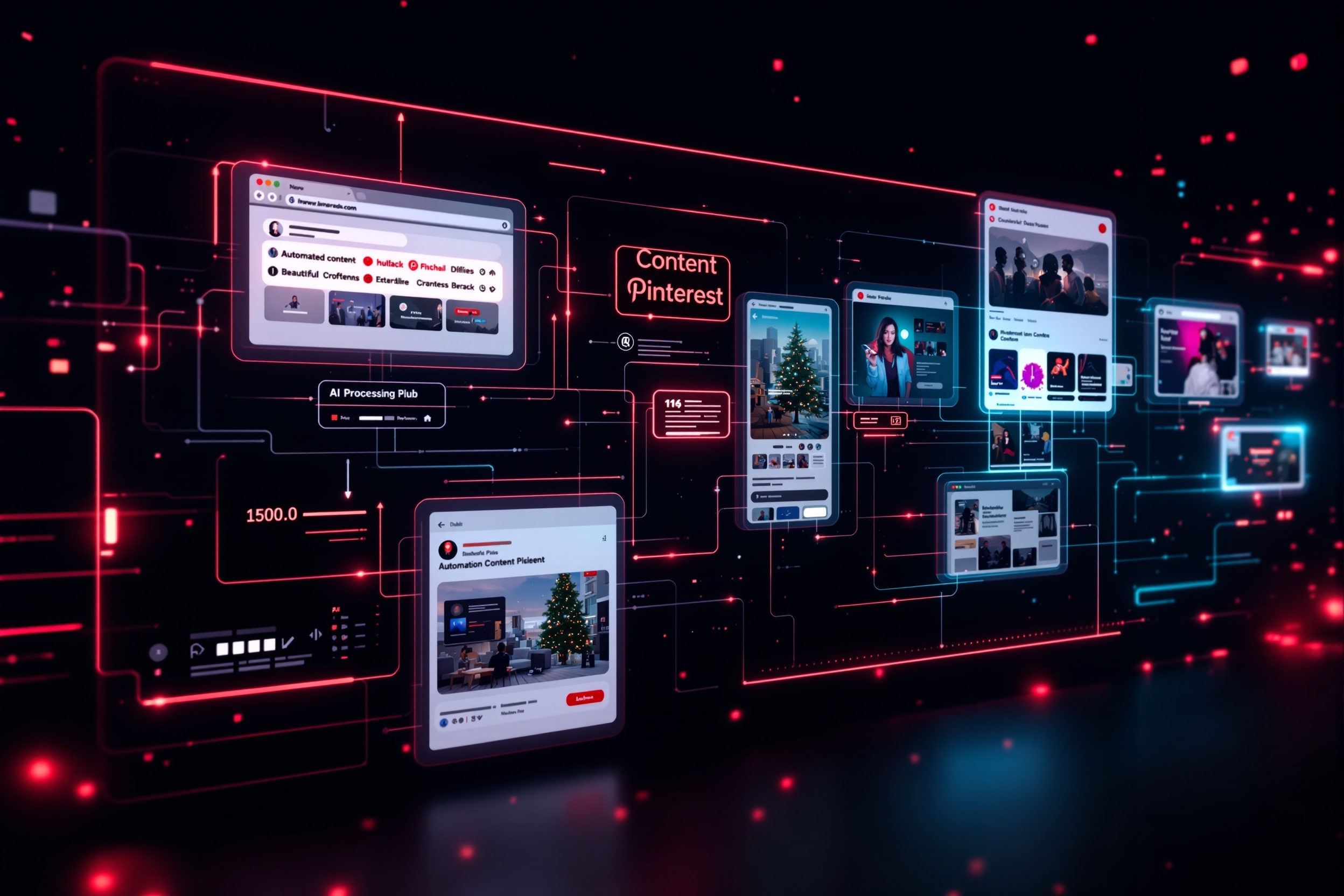
Platforms like TrafficWave Generator ingest your existing content — blog posts, product pages, storefronts — and automatically convert them into optimized pins. The system analyzes your source URLs, extracts relevant topics and keywords, generates compelling visuals, and writes SEO-optimized descriptions. All without you touching a design tool.
How URL-to-Pin Automation Works
The automation engine scans your content feed — RSS, blog archives, product catalogs — and pulls source URLs. For each URL, it analyzes the headline, meta description, and body text to extract the core topic and high-intent keywords. Then it generates multiple pin variations: image pins, video pins, and carousel pins, each optimized for different board categories and audience segments.
The result is a dynamic, self-updating content stream. When you publish a new blog post, new pins are generated automatically. When you update a product page, the corresponding pins refresh with current pricing and availability. The system evolves with your content, ensuring your Pinterest presence always reflects your latest offerings.
Setting Up Source URLs and Feed Cadence
Start by connecting your primary content sources. For most businesses, this includes:
- Blog RSS feed — Every new article becomes a set of fresh pins targeting relevant keywords.
- Product catalog pages — Each product category feeds a dedicated board with rich pins.
- Newsletter archives — Repurpose high-performing email content into evergreen pins.
- YouTube or video content — Video pins drive engagement and funnel viewers to your site.
Establish a cadence rule that balances frequency with quality. For most accounts, 3-5 pins per day across all boards is the optimal range. Too few, and you miss visibility. Too many, and you risk content fatigue. The automation system handles the scheduling, staggering posts across time zones to maximize reach.
2. Keyword-Driven Pin SEO: Targeted Keyword Strategy for Pinterest
Pinterest is a search engine. This means keywords are everything. The difference between a pin that gets 10 impressions and one that gets 10,000 is almost always keyword alignment. If your pin does not match what people are searching for, it does not exist.
A disciplined keyword strategy is not about stuffing terms into descriptions. It is about understanding buyer intent and mapping your content to the exact moments when people are ready to engage, save, and click through.

How to Identify High-Intent Keywords
Begin with a structured discovery process. Do not guess. Use Pinterest's own search suggestions, Pinterest Trends, and third-party tools to build a keyword atlas. Focus on terms that imply action: product categories, problem-solving queries, and solution-based searches.
Differentiate between broad discovery terms and long-tail intent phrases. Broad terms like "home decor" get volume but compete with millions of pins. Long-tail terms like "mid-century modern living room ideas for small apartments" have less competition and capture buyers who know exactly what they want.
- Use Pinterest search suggestions and autocomplete to map common search intents.
- Prioritize phrases aligned with your core offerings and the buyer journey stages.
- Assess seasonality and evergreen applicability to sustain traffic beyond peak periods.
Mapping Keywords to Boards and Pin Copy
Once you have your keyword atlas, translate it into a content architecture. Every board should represent a primary search intent. Every pin should target a specific keyword cluster. The board description, pin title, alt text, and description all work together to signal relevance to Pinterest's algorithm.
- Assign 2-3 core keywords per board to guide pin creation and optimize board descriptions.
- Craft pin titles and descriptions that mirror user queries using natural language.
- Incorporate keyword variations and synonyms to broaden reach while preserving clarity.
3. Board Architecture for Discoverability: Structuring Boards to Maximize Reach
Your boards are the foundation of your Pinterest presence. A well-structured board hierarchy acts like a content library — organized, searchable, and designed to guide users toward your website. Poorly structured boards create friction. Well-structured boards create momentum.
Creating Topic-Focused Boards
Each board should represent a clear, specific topic that your target audience searches for. A lifestyle brand might have boards for "meal prep recipes," "home fitness gear," and "sustainable living tips." A B2B SaaS company might have boards for "CRM best practices," "sales automation workflows," and "customer retention strategies."
The key is specificity. Broad boards like "business tips" get lost. Specific boards like "cold email templates for B2B SaaS" rank and convert. Every board is a doorway. Make it clear what is behind the door.
Hierarchy, Naming Conventions, and Optimization
Implement a tiered board structure that mirrors the user journey from broad awareness to specific solution. Use consistent naming conventions that are optimized for Pinterest search. Board descriptions should include actionable language, clarify the covered topics, and embed your target keywords naturally.
- Use hierarchical naming like "Main Topic > Subtopic" to convey scope and intent.
- Regularly audit board performance to identify underperforming topics for consolidation or re-optimization.
- Group boards by primary topic, maintaining 4-8 boards per major category to prevent fragmentation.
4. Pin Formats That Convert: The Three Pin Types That Drive Buyers
Not all pins are created equal. Pinterest offers multiple formats, and each serves a different purpose in the buyer journey. The most successful Pinterest strategies use a mix of all three, strategically deployed to match the user's intent at each stage.

Standard Pins Optimized for Search
Standard image pins are the backbone of any Pinterest strategy. They align with search intent, support a steady content cadence, and are the easiest to produce at scale. A consistent posting rhythm of 2-3 standard pins per week per board helps sustain visibility in search results.
The key to standard pins is keyword-rich descriptions paired with visually striking images. Each pin should answer a specific search query. "How to organize a small pantry" should show a clean, organized pantry with a text overlay that promises the solution. The description should include the exact keyword, related terms, and a clear call-to-action.
Idea Pins and Video Pins for Engagement
Idea pins and video pins deepen engagement by delivering instructional, narrative content. These formats work best for building trust and nurturing leads who are not ready to buy yet but are actively researching. A home improvement brand can publish a 5-step tutorial series, guiding viewers from problem awareness to product recommendation.
Aim for at least one idea pin or video pin per week. Repurpose the series into short clips for cross-platform distribution. Track completion rates and saves to optimize pacing and topics. Video pins with clear branding and consistent hooks outperform generic content by 40% on average.
Rich Pins and Product Pins
Rich pins and product pins are the conversion engines. They bring real-time product data — pricing, availability, size options — directly into the pin, minimizing friction at the click. For e-commerce brands, this is non-negotiable. A fashion retailer can auto-sync inventory data so shoppers always see current pricing and stock levels.
Enable structured data on your website to support rich pins. Use product pin templates that refresh metadata automatically. Pair with a disciplined posting schedule to introduce new product pins during peak shopping windows. The result is high-intent traffic that converts at 2-3x the rate of standard social media traffic.
5. Automation Workflow: Scheduling, Drip, and Lifecycle Management
A well-designed automation workflow is the difference between a Pinterest strategy that works and one that fizzles. The workflow must balance publishing cadence with content quality, ensuring a steady stream of fresh pins without overwhelming your audience or triggering algorithmic penalties.
Setting Publishing Cadence Across Boards
Define a balanced schedule that respects board intent and audience behavior. High-intent boards (like product categories) may need daily pins. Educational boards may perform well with 2-3 pins per week. The automation system distributes pins across topic clusters to maintain even exposure.
- Synchronize pin generation with source content updates to maintain freshness. Schedule biweekly reviews of top-performing boards.
- Stagger postings across time zones to maximize reach. Apply a baseline cadence per topic and flexible overrides during peak seasons.
- Adapt cadence based on board performance signals. Apply a 2-4 week adjustment window when metrics shift significantly.
- Capture performance deltas and auto-rotate to higher-performing variants within 24-72 hours of detection.
- Leverage dynamic content templates to refresh visuals while preserving brand fidelity. Test alternative hero images and caption lengths.
- Schedule quarterly audits to reset aging pins and reallocate momentum to active content streams.
Automated Monitoring and Re-Optimizing Underperformers
Automation is not "set it and forget it." The best systems continuously monitor performance signals — impressions, saves, clicks, and outbound traffic — and trigger optimization cycles. When a pin stagnates, the system can auto-generate variations in visuals, copy, or target keywords, restarting the performance cycle without manual intervention.
- Auto-detect underperforming pins and trigger redesign variations in visuals, copy, or target keywords within 48 hours.
- Leverage dynamic content templates to refresh visuals while preserving brand fidelity. Test alternative hero images and caption lengths.
- Schedule quarterly audits to reset aging pins and reallocate momentum to active content streams.
Stop Designing Pins Manually
Let AI auto-generate your video and image pins, write your SEO titles, and schedule your content weeks in advance. Reclaim your time and focus on scaling your business strategy.
Automate Your Pinterest Workflow6. Quality Signals at Scale: Visual Consistency, Branding, and Trust
At scale, quality signals differentiate long-term Pinterest winners from short-term noise. Consistent visuals and branding reinforce recognition across your content stream. Disciplined asset management reduces the risk of misalignment between pins and your value proposition. Automated systems must embed governance controls to preserve brand integrity as volume increases.
Brand Kit Standards for Automation
Automation should enforce a centralized brand kit that governs color palettes, typography, logo usage, and imagery style. This framework enables uniform pin presentation regardless of content source and supports reliable perception of professionalism.
- Specify primary and secondary colors with exact hex codes for all templates. Document acceptable variations for digital use.
- Pin templates must include logo placement rules and safe zones to preserve legibility, with explicit margins for mobile thumbnails.
- Standardize typography hierarchies for titles, descriptions, and alt text constraints, including character limits per field.
Image Guidelines and Alt Text Practices
Images should uphold clarity, contrast, and detail standards that support quick comprehension in thumbnail views. Alt text should be descriptive and aligned with the pin's value proposition while remaining keyword-aware to aid accessibility and search indexing.
- Use high-resolution visuals with consistent aspect ratios suited to each pin type, maintaining 2:3 or 1:1 ratios where applicable.
- Craft alt text that conveys the pin's value and target terms in natural language, avoiding stuffing.
- Maintain metadata consistency across the content stream to support reliable discovery feedback.
7. Analytics and Optimization: Metrics That Move Outbound Traffic
Analytics within a Pinterest automation framework translate activity into actionable insight. The objective is to identify signals that reliably correlate with outbound traffic and sustained engagement, rather than reacting to vanity metrics alone. A disciplined measurement approach supports continuous optimization of the content stream and the automation workflow.

Key Pinterest Metrics to Track
- Impressions and reach — Assess visibility across your content stream. Low impressions signal keyword or timing issues.
- Saves and shares — Indicate content relevance and long-term discoverability. High saves correlate with sustained traffic.
- Click-through rate — From pins to source URL. This is your primary conversion signal. Aim for 1-3% for most niches.
- Outbound conversions — Purchase events or lead captures tied to Pinterest traffic. The ultimate ROI metric.
- Pin impression latency — How quickly new pins begin accumulating engagement. Faster latency = better keyword alignment.
A/B Testing and Iterative Improvement
Continuous improvement requires controlled experimentation. Test one variable at a time — image design, copy length, keyword targets, pin format — and measure the impact on CTR. Maintain a test log to document learnings and inform future template design.
- Experiment with variations in image design, copy length, and keyword targets to isolate impact on CTR.
- Maintain a controlled test environment by isolating one variable per test cycle.
- Use statistically sound sampling and track confidence levels before implementing changes at scale.
- Document learnings to inform future dynamic content templates and pin creation rules.
Frequently Asked Questions
What is Pinterest automation and how does it work?
Pinterest automation is the process of using tools and systems to automatically create, schedule, and publish pins to your Pinterest boards without manual intervention. It works by connecting your content sources (like blog RSS feeds, product pages, or content hubs) to an automation platform that generates optimized pins with keyword-rich titles, descriptions, and visuals, then publishes them on a consistent schedule.
Can Pinterest automation really drive consistent buyer traffic?
Yes, when implemented correctly. Pinterest operates as a visual search engine where evergreen pins remain discoverable for months or even years. By automating a steady stream of keyword-optimized pins that align with buyer intent, you create a sustainable traffic pipeline. Studies show that automated Pinterest strategies can generate 3-5x more outbound clicks compared to sporadic manual pinning.
How many pins should I publish per day for optimal results?
For most accounts, 3-5 fresh pins per day is the sweet spot. This frequency signals consistent activity to Pinterest algorithm without overwhelming your audience. Quality matters more than quantity — each pin should target specific keywords and provide genuine value. Automation tools help maintain this cadence without the manual effort.
What are the best pin formats for driving sales?
Standard pins optimized for search work best for consistent traffic. Rich pins and product pins are essential for e-commerce as they display real-time pricing and availability. Idea pins and video pins drive deeper engagement and are ideal for tutorials, product demos, and storytelling content that nurtures buyers through the funnel.
How do I maintain brand consistency with automated pins?
Establish a centralized brand kit with defined color palettes, typography, logo placement rules, and image style guidelines. Use templated pin designs that enforce these standards automatically. Schedule quarterly audits to ensure all automated content aligns with your evolving brand identity and visual guidelines.
Which keywords should I target on Pinterest?
Focus on high-intent keywords that signal buyer behavior — product categories, problem-solving queries, and solution-based searches. Use Pinterest's built-in search suggestions, trending topics, and competitor analysis. Long-tail keywords often outperform broad terms because they capture specific intent with less competition.
Conclusion
The organic traffic bottleneck for online businesses is real. Paid ads are expensive and temporary. Social media algorithms are unpredictable. Content marketing is slow. Pinterest automation offers a fourth path — one that is sustainable, scalable, and compounding over time.
By building a structured automation framework, you transform Pinterest from a sporadic effort into a reliable traffic engine. The key components are clear: programmatic pin creation from your existing content, keyword-driven SEO aligned with buyer intent, a board architecture that mirrors the customer journey, and continuous analytics that turn guesswork into data-informed decisions.
The brands winning on Pinterest today are not the ones posting the most. They are the ones posting the smartest. They have systems. They have templates. They have automation. And they have the discipline to measure, optimize, and iterate.
Start small. Pick one content source, one board, and one keyword cluster. Build your first automation workflow. Measure the results. Then scale. Within 90 days, you can have a Pinterest presence that generates consistent, high-intent buyer traffic without requiring daily manual effort.
The opportunity is not going away. Pinterest's user base is growing. Its search functionality is improving. And its role as a visual discovery engine is becoming more central to how people plan, shop, and decide. The question is whether you will capture that traffic systematically — or leave it on the table.
Build Your Evergreen Traffic Pipeline Today
Stop paying for clicks and relying on short-term social media algorithms. Turn your website into a passive traffic machine by tapping into Pinterest's 619 million high-intent buyers. TrafficWave Generator 3.0 handles everything — from content ingestion to pin creation, SEO optimization, and publishing — so you can focus on growing your business.
Start Generating Free TrafficTable of Contents
Need Help With Pinterest SEO?
Our team specializes in Pinterest optimization and traffic automation. Book a free strategy call to see how we can help.
Book Free Strategy CallStay Updated
Get the latest Pinterest automation and SEO insights delivered to your inbox.